

Cari compagni viaggiatori ☕️
Questa volta ci rechiamo nel cuore di Napoli, nello specifico vi porto a Spaccanapoli.
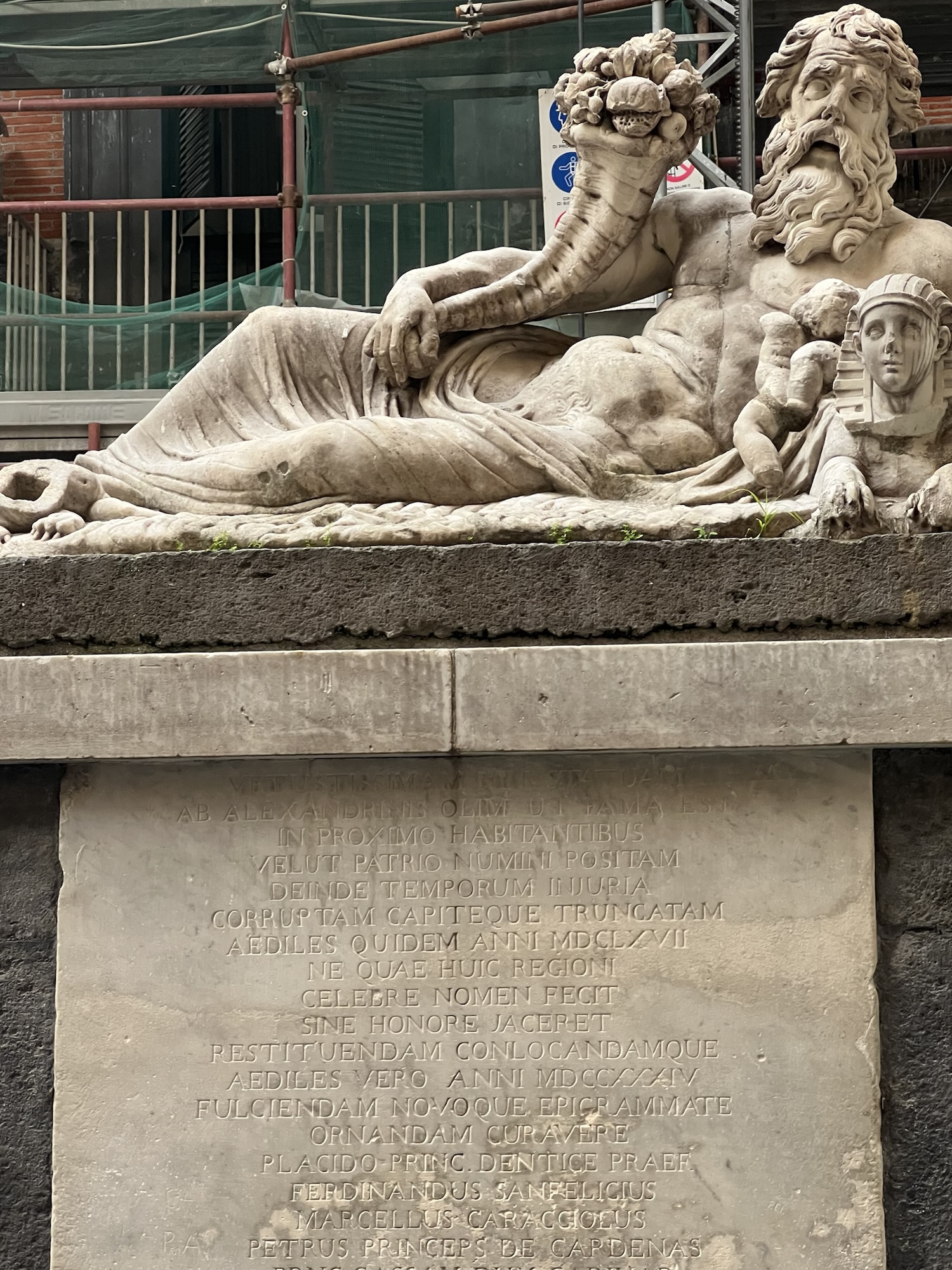
A piazzetta Nilo, sorge una statua molto particolare, è la statua del Dio Nilo. Essa è legata ad una leggenda molto antica, di origine greco-romana. Venne eretta da mercanti egiziani che vivevano a Napoli. Queste persone volevano rendere omaggio al fiume Nilo, fonte di vita e di fertilità.
La leggenda racconta che il Dio protegga la città, portando fortuna a chi lo visita, vegli sui commerci, abbia poteri legati all’acqua e alla fertilità.
C’è anche una credenza secondo cui chi tocca la statua riceve fortuna soprattutto a chi intraprende un nuovo progetto.
La statua per molti anni è rimasta senza testa, per questo veniva chiamata O’ corpo e Napule, solo più avanti le è stata attaccata ma la nomea è rimasta quella.
Al dio Nilo, infine, è legata anche una leggenda molto meno conosciuta: sotto la statua si nasconderebbe un tesoro.
Oggi, il Dio Nilo rappresenta uno dei simboli di culto della città.
Città che dimostra da sempre integrazione sociale anche alle minoranze etniche, mostrando la sua generosità ed il suo cuore grande 💜
🇬🇧
Dear fellow travelers ☕️
This time we head into the heart of Naples, specifically to Spaccanapoli.
In Piazzetta Nilo, there stands a very unique statue: the statue of the God Nile. It is linked to a very ancient legend of Greco-Roman origin. It was erected by Egyptian merchants who lived in Naples, as a tribute to the Nile River, a source of life and fertility.
The legend tells that the god protects the city, bringing good fortune to those who visit, watching over trade, and possessing powers connected to water and fertility.
There is also a belief that anyone who touches the statue receives good luck, especially those starting a new project.
For many years, the statue remained without a head, which is why it was called “O’ corpo ‘e Napule” (the body of Naples). Only later was the head added.
Finally, another much lesser-known legend is also linked to the God Nile: a treasure is said to be hidden beneath the statue.
Today, the God Nile represents one of the city’s symbolic figures of devotion.
A city that has always shown social integration toward ethnic minorities, demonstrating its generosity and its big heart 💜
Rispondi